How to Buy Guest Posts Without Getting Scammed
Nobody gets scammed on purpose. They get scammed because the listing looked fine and they didn't know the two or three checks that would have exposed it. Here are the seven scams we see most, and exactly how to catch each.
Scam 1 — Fake DA farms
Domain Authority can be pumped by pointing a flood of junk links at a domain. The score climbs; the site is still worthless. Catch it: ignore DA as a primary signal and check organic traffic. High DA plus near-zero traffic is a manufactured metric.
Scam 2 — Traffic from one spam country
A listing brags about "50K monthly visitors." You look closer and 90% comes from a country unrelated to the site's language or your market. That's bought or bot traffic. Catch it: always read the country split, not just the headline number.
Scam 3 — PBN "premium" sites
Private blog networks dress up with stock photography and a slick theme, but every outbound link is commercial and the content is thin. Catch it: look at who else they link to. If every article links out to unrelated commercial pages, it's a network, not a publication.
Scam 4 — Disappearing links
The post publishes, you pay, and a month later the link is gone or the whole article is deleted. Catch it: only buy where link removal is covered by a written guarantee, and monitor your placements after publication.
Scam 5 — Reseller markups
Someone lists a site you could order elsewhere for $100 and charges you $180, pocketing the difference for forwarding an email. Catch it: buy from providers who fulfill in-house at the price on the card, with no hidden layer between you and the site.
Scam 6 — "DA 90 for $30"
If a placement seems impossibly cheap for its metrics, the metrics are fake or the link is worthless. Authority that real costs real money. Catch it: sanity-check price against the real price bands — anything wildly below them is a tell.
Scam 7 — Fake screenshots
Sample "placements" that are mocked up in an image editor, or live links that quietly go nofollow after you approve. Catch it: ask for live URLs of past placements, and verify the link type yourself on the live page.
The 5-minute vetting checklist
Before every purchase, run this: (1) organic traffic is real and trending flat-or-up; (2) traffic comes from your target country; (3) the site's topics relate to yours; (4) outbound links look editorial, not a link farm; (5) there's a written guarantee covering non-publication and link drops. Five checks, five minutes, most scams eliminated. We go deeper on the metric side in DA vs DR vs traffic.
What guarantees should look like
A real guarantee is specific: not published as described equals a full refund; a dropped link inside a defined window equals re-placement or refund. Vague promises ("satisfaction guaranteed") are marketing, not protection. Read the refund policy before you pay, not after something goes wrong.
How we handle each risk at Speka
We vet every site for genuine organic traffic before it's listed, show the metrics that are hard to fake, and label link type on every card. Our team fulfills orders directly — no reseller layer — and every placement is backed by a money-back guarantee plus post-publication monitoring. If a link drops, we re-place it or refund you.
Skip the vetting grind. Every site in our marketplace has already cleared these checks, with metrics and guarantees on the card. Browse vetted sites →
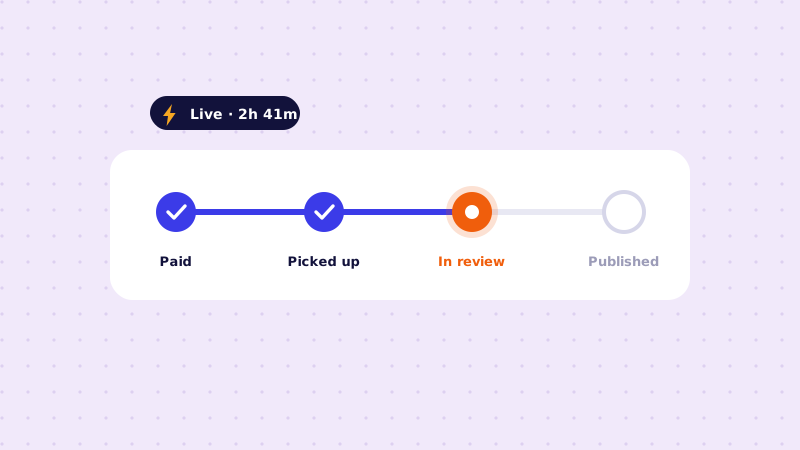
Vetted sites with verified traffic in the marketplace — most placements live within 3 hours.
Browse the marketplace →